Was zählt als Direct?
Sessions mit keiner identifizierbaren Quelle: kein Referrer, keine getaggte Kampagne, kein eindeutiger Ad-Klick. Der Topf ist real, aber zu oft ein Sammelbecken für Besuche, die nie korrekt attribuiert wurden.
Die 40 % fehlen nicht, weil sie nicht existieren – sie fehlen, weil Ihr Tracking-Setup sie nie erfasst hat. MarchiteQ auditiert, repariert und rekonstruiert Conversion Tracking, damit jede Entscheidung auf vollständigen Daten basiert.
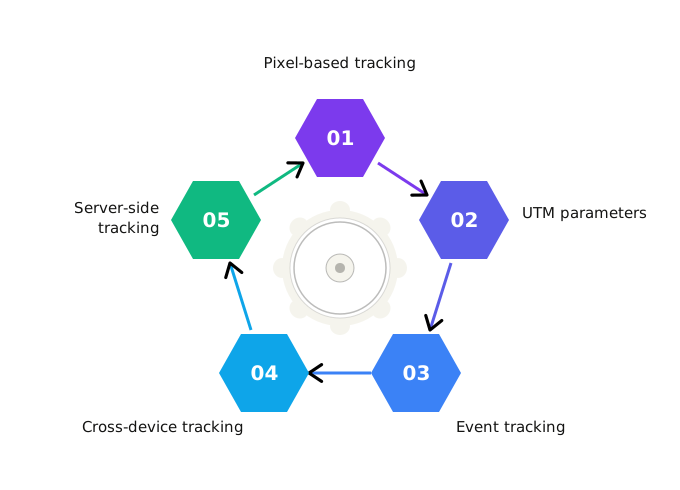
Die meisten Unternehmen gehen davon aus, dass ihr Tracking funktioniert, weil Zahlen im Dashboard erscheinen. Dass Zahlen erscheinen, ist nicht dasselbe, wie dass Zahlen korrekt sind.
So sieht kaputtes Conversion Tracking in der Praxis aus:
Das sind keine Ausnahmen. Das ist die Regel. Und jede Marketing-Entscheidung, die auf kaputtem Tracking aufbaut, multipliziert den Fehler.
Hoher Direct Traffic bedeutet meist, dass Sessions im falschen Topf landen – nicht, dass „alle Ihre URL eingetippt haben“. Das ist das Muster, das wir am häufigsten sehen:
Sessions mit keiner identifizierbaren Quelle: kein Referrer, keine getaggte Kampagne, kein eindeutiger Ad-Klick. Der Topf ist real, aber zu oft ein Sammelbecken für Besuche, die nie korrekt attribuiert wurden.
In einem soliden Setup liegt Direct meist unter 50 % des Gesamttraffics (Marke und Channel-Mix spielen eine Rolle). Liegt Direct dauerhaft höher, vor allem als Top-„Channel“, stimmt meist etwas nicht.
Paid- und Partner-Links ohne konsistente UTM-Parameter landen in Direct. Kampagnen-Reports wirken sauber – der Channel-Mix tut es nicht.
HTTPS → HTTP und ähnliche Übergaben können Referrer-Daten entfernen, sodass Analytics die echte Quelle verliert.
Multi-Domain-Funnel ohne korrekte Konfiguration brechen die Kette vom Ad-Klick zur Conversion – Besuche erscheinen als Direct.
Customer Journeys, die von App zu Web wechseln, ohne Attribution-Link, landen oft als Direct in Ihren Reports.
Newsletter und Lifecycle-E-Mails ohne UTM-Tracking erscheinen als Direct, auch wenn sie die Session ausgelöst haben.
Conversions, die Paid-Kampagnen tatsächlich erzeugt haben, erscheinen als Direct. Organic und Direct sehen stärker aus, als sie sind; Paid-ROAS sieht schwächer aus. Teams kürzen Budgets – und der Umsatz fällt ohne offensichtliche Erklärung im Dashboard.
Aufgeblähter Direct Traffic ist systematische Fehlattribution. Er steuert Monat für Monat die falschen Budget-Entscheidungen.
Event-Taxonomie, Konfiguration der Conversion-Events, Cross-Domain-Tracking, Session-Attributionsmodell und Datenstrom-Setup. Wir prüfen, was getrackt wird, was fehlt und was doppelt gezählt wird.
Tag-Implementierung (Google Tag / GTM), Konfiguration der Conversion Actions, Import vs. natives Tracking, wertbasiertes Conversion-Setup und Cross-Device-Attribution. Wir gleichen Google-Ads-Daten gegen GA4 ab, um Abweichungen zu isolieren.
Pixel-Gesundheitscheck, Event-Deduplikation zwischen Browser-Pixel und CAPI, Event-Match-Quality-Scores und Abdeckung der Standard-Events. Die meisten Unternehmen erfassen 30–50 % weniger Conversions in Meta, als tatsächlich stattfinden – mit direktem Einfluss auf die Kampagnen-Performance.
Welches Attributionsmodell nutzt Ihr Unternehmen tatsächlich plattformübergreifend? Datengetrieben, Last Click und linear erzeugen radikal unterschiedliche Credit-Verteilungen. Wir mappen, was jede Plattform meldet, und bauen eine konsolidierte Sicht.
Jeder Paid-Channel, jede E-Mail-Kampagne und jeder Partner-Link wird auf konsistente, korrekte UTM-Parameter geprüft. Das ist häufig die Hauptursache für aufgeblähten Direct Traffic.
Die Wiederherstellung von 40 % unsichtbarer Conversion-Daten ist keine technische Spielerei. Es ist eine geschäftliche Entscheidung, die alles Nachgelagerte verändert:
Google Ads attribuiert eine Conversion auf den Tag des Ad-Klicks. GA4 attribuiert die Conversion auf den Tag, an dem das Conversion-Event tatsächlich stattfand. Ein Klick am 1. März, der am 10. März konvertiert, erscheint in Google Ads am 1. März und in GA4 am 10. März. Wenn Sie Zeiträume vergleichen, vor allem an den Rändern, werden die Zahlen nie sauber übereinstimmen.
First User dreht sich um Akquise: Welcher Kanal hat diese Person erstmals zur Marke gebracht – persistent bis zum Cookie-Reset. Session betrifft Engagement: Was hat sie in diesem konkreten 30-Minuten-Fenster hergeführt – wobei GA4 Direct ignoriert und 90 Tage nach der letzten Non-Direct-Quelle zurückblickt. Source/Medium ist der Kanal zum Zeitpunkt des Key-Events. Für Kampagnen-Performance wollen Sie fast immer Session Source/Medium; für Conversion-Attribution brauchen Sie den Advertising-Bereich oder Event-Reporting.
GA4 wendet ein 90-Tage-Lookback-Fenster an, das Direct-Traffic durch die letzte bekannte Non-Direct-Quelle ersetzen soll. Aber dieses Lookback hängt komplett davon ab, dass die Client-ID im Browser-Cookie überlebt. Hat der User Cookies gelöscht, Browser oder Gerät gewechselt – oder ITP in Safari den Cookie nach 7 Tagen entsorgt – hat GA4 keinen Datensatz früherer Sessions, auf den zurückgeblickt werden könnte. Ohne vorherige Quelle bleibt nur das Label Direct. Das ist kaputte Attribution. Nur Server-Side-Tracking behebt das.
Datengetriebene Attribution existiert in GA4 an genau einer Stelle: dem Attribution Report unter Advertising. Das war’s. Jeder Standard-Report in GA4 – Acquisition, Engagement, Conversions – nutzt nicht-datengetriebene Dimensionen.
Ad-Plattformen zählen Klicks, GA4 zählt Sessions. Eine Seite, die zu langsam lädt, erscheint als Klick in der Ad-Plattform, wird aber nie zur Session in GA4. Bot-Traffic wird in GA4 herausgefiltert, aber in Ad-Plattformen mitgezählt. UTM-Parameter werden durch Browser-Restriktionen oder Redirects gestrippt – oder durch Ad-Identifier wie gclid überschrieben.
Jede Woche, in der Sie Kampagnen auf unvollständigen Daten fahren, ist eine Woche Entscheidungen, denen Sie nicht trauen können. Das Audit dauert Tage. Die Wirkung bleibt.